Why Does Your Dog Have Bad Breath? What Their Mouth Is Telling You
Key Takeaways
- Persistent bad breath is usually a sign, not just a nuisance.
- The most common cause is tartar and bacteria along the gumline, the start of dental disease.
- Bad breath paired with gut symptoms can point to digestive imbalance.
- Daily brushing, safe chews, and whole-food nutrition all help.
- A veterinary dental check catches problems hiding below the gumline.
We tend to laugh off dog breath as just part of having a dog. But your dog's breath is one of the easiest early signals to read, and it is often telling you something worth listening to.
Persistent bad breath is rarely only about the mouth. It can point to dental disease, and sometimes to what is happening deeper in the gut. The good news is that small, steady habits make a real difference.
What Bad Breath Actually Signals
A little doggy breath is normal. Breath that is consistently strong, sour, or unusually foul is not. The most common cause is a buildup of bacteria and tartar along the gumline, the early stage of dental disease.
Dental disease is easy to miss because it develops quietly, out of sight. Left alone, it can cause pain, tooth loss, and inflammation that affects the whole body over time. That is why breath is such a useful early warning, it shows up before the serious problems do.
When Bad Breath Points to the Gut
Sometimes the mouth is not the whole story. Because so much of a dog's health starts in the digestive system, an imbalanced gut can show up as bad breath too.
If your dog also has changes in stool, appetite, or energy along with the odor, the gut may be part of the picture. Supporting digestion with whole foods and fewer ultra-processed fillers helps here, the same ideas we cover in the dog gut-brain connection.
Simple Daily Steps That Help
Start this week
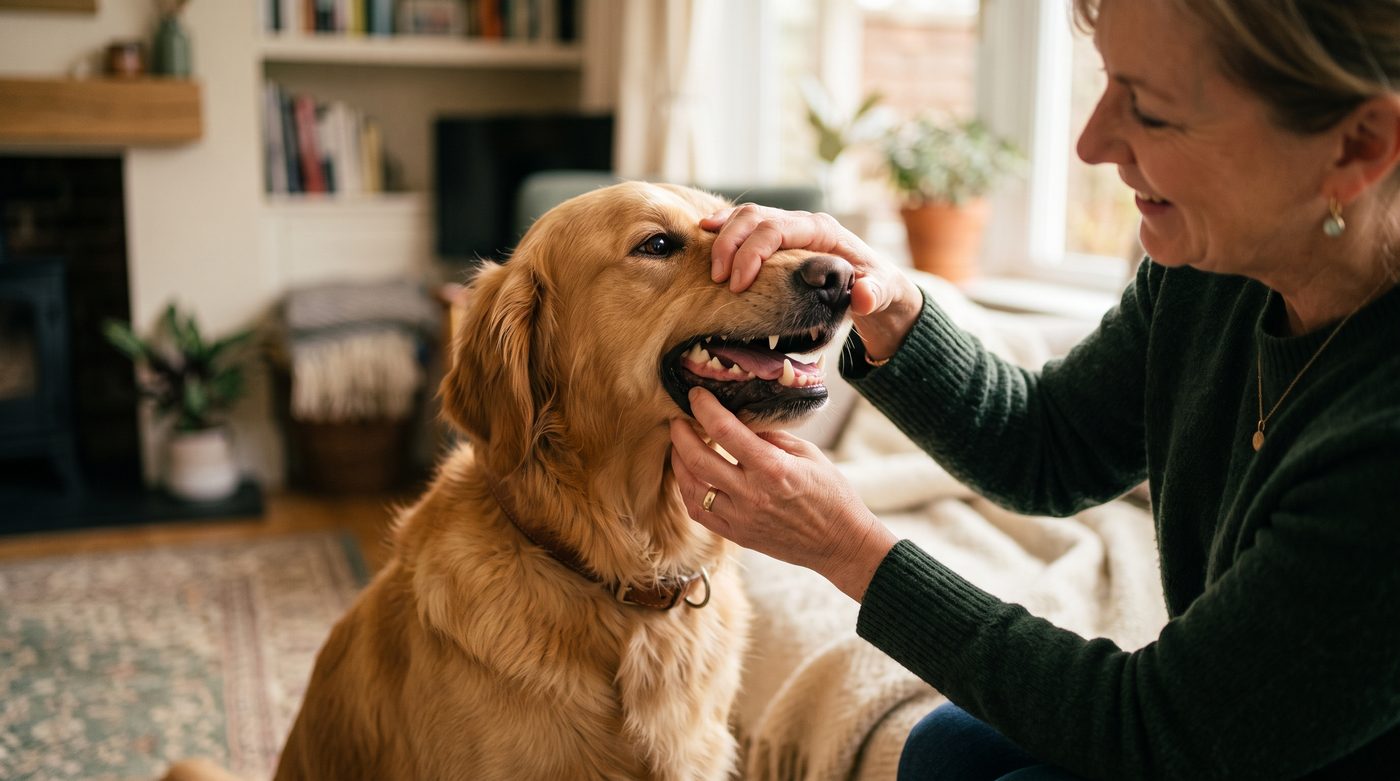
- Look inside your dog's mouth regularly. Note red or swollen gums, heavy tartar, or any broken teeth.
- Brush your dog's teeth with a dog-safe toothpaste, working up slowly so it stays a positive experience.
- Offer safe chews and consider vet-approved dental options that help reduce buildup.
- Support the gut with quality, whole-food nutrition and fewer processed treats.
- Book a veterinary dental check. Some tartar needs professional cleaning, and your vet can spot problems hiding below the gumline.
Bad breath is not something to cover up with a mint. It is a small, honest signal, and when you act on it early, you protect your dog's comfort and their long-term health.