Labradoodle Anxiety: Signs and How to Help
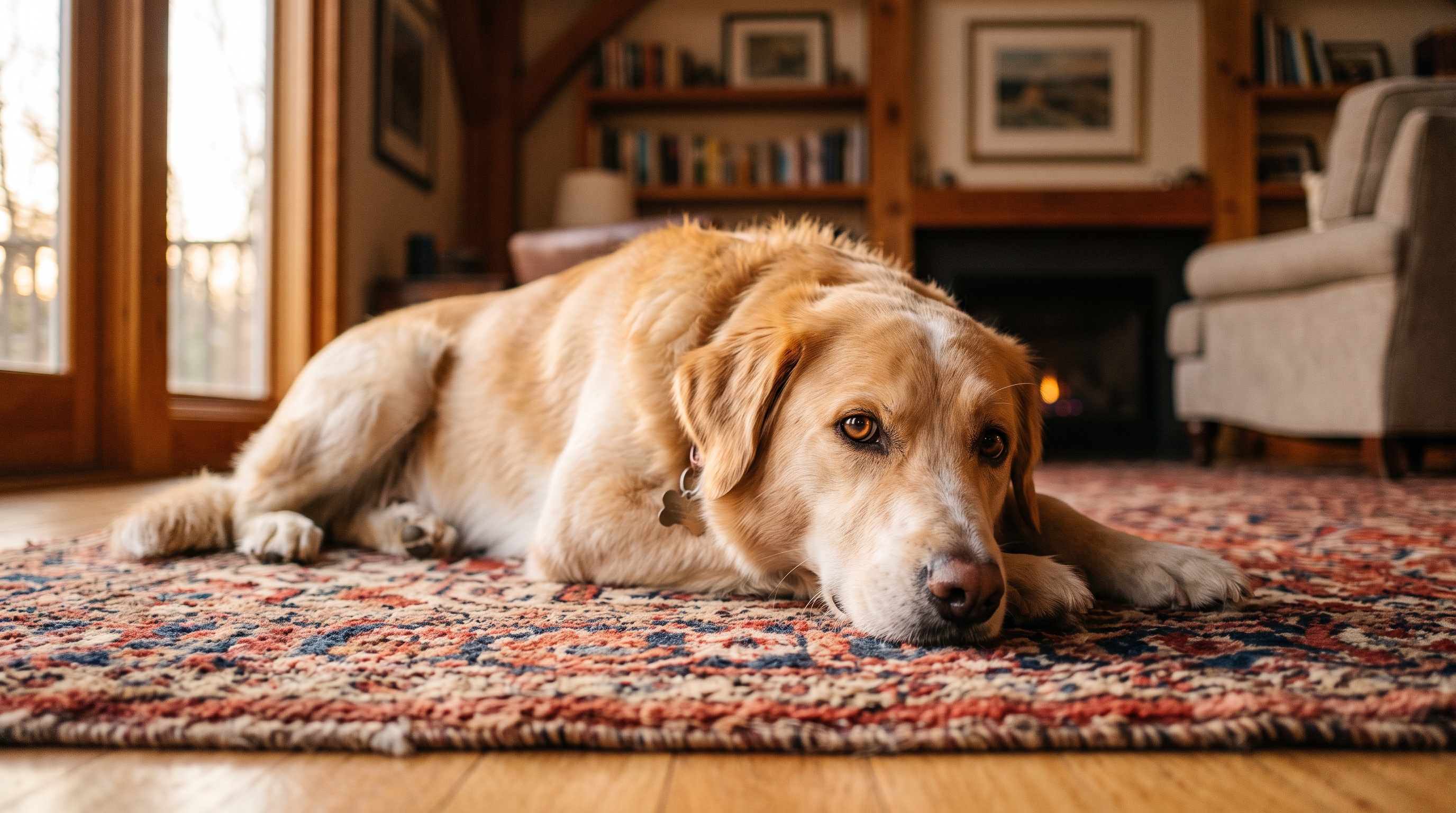
Energy, Exercise, and Misread Anxiety
Labradoodles blend Labrador Retriever drive with Poodle intelligence, creating a dog that needs significant daily activity. Not all Labradoodles are high-energy, but most need more movement and mental engagement than casual walks provide. A Labradoodle with pent-up energy might look anxious when the real problem is simply too much energy and not enough outlet.
A Labradoodle that paces, jumps constantly, shows destructive behavior, or seems unable to settle might not be anxious at all. They might be asking, "When are we going to do something?" A Labradoodle that gets 45 minutes to an hour of real activity each day, combined with mental work, often settles into a completely different dog. That calm, focused Labradoodle might have been under-exercised, not anxious.
The challenge is telling the difference between true anxiety and under-exercise. True anxiety often does not improve much with exercise alone. A dog with true separation anxiety will still be anxious and destructive when alone, even if they got a long walk in the morning. An under-exercised dog often settles dramatically when their daily activity level increases.
Mental Engagement and Focus
Labradoodles inherit Poodle intelligence and Labrador trainability. A Labradoodle mind that is not engaged becomes a mind looking for problems. Training sessions, puzzle toys, scent games, and novel experiences give a Labradoodle's brain something to do. That focus often prevents anxiety from developing.
Consistent training and clear rules also help. A Labradoodle that knows what is expected and has a job feels more secure than one in an unpredictable environment. Some Labradoodles do wonderfully with agility, dock diving, retriever work, or even just having a daily walk route where they are searching for something specific.
The combination of Labrador and Poodle genetics also brings inherited health considerations. Hip dysplasia, inherited eye conditions, and ear infections are all common. An uncomfortable Labradoodle is more likely to show behavioral issues. A comfortable, well-exercised, mentally engaged Labradoodle is usually a calmer dog.
Activity, Routine, and Health
Start by increasing your Labradoodle's daily activity. Most do best with at least 45 minutes to an hour of real activity combined with 30 minutes of mental engagement daily. This might be a run or fetch session plus a training session or puzzle game. After a few weeks of increased activity, notice whether the anxious behaviors improve.
If increased activity significantly reduces anxiety, the problem was likely under-exercise, not separation anxiety or other forms of stress. If the anxiety persists even with plenty of activity, then other factors might be involved.
Create a stable routine. Feeding at the same times, activity at predictable times, and wind-down before bed all help. A Labradoodle that knows what to expect feels more secure.
Keep your Labradoodle's ears healthy through regular cleaning, since ear infections are common. Watch for signs of joint strain or discomfort as your Labradoodle ages. If your Labradoodle's anxiety is new or worsening despite increased activity, or if it is paired with changes in eating, energy, or movement, talk to your vet. Pain, illness, or medical issues can drive behavioral anxiety. Your vet can help you sort out what is happening and support your Labradoodle's wellbeing.