Understanding Dog Anxiety and How to Support Your Dog
Key Takeaways
- Anxiety is your dog's response to a perceived threat, so rule out medical causes first
- Anxiety shows up differently in each dog, so learn your dog's own signs of stress
- A predictable routine and calm space reduce triggers and build confidence
- See your vet if anxiety is new, worsening, or affecting quality of life
What Causes Dog Anxiety
Dog anxiety does not happen in a vacuum. Your dog's nervous system responds to their environment, their past experiences, and their physical health. Some dogs are naturally more cautious or sensitive than others, and that is normal. Anxiety can start with a specific trigger like thunderstorms or fireworks, or build gradually over time.
Common triggers include loud noises, unfamiliar people or dogs, changes in routine, confinement, or a painful health condition. Puppies who missed key socialization may feel more anxious as adults. Anxiety is really your dog's way of saying something feels unsafe.
Sometimes the root is physical. Pain or discomfort can look like behavioral anxiety, which is one reason the vet visit matters. Digestion plays a role too, since the gut-brain connection in dogs is very real.
How to Recognize Anxiety in Your Dog
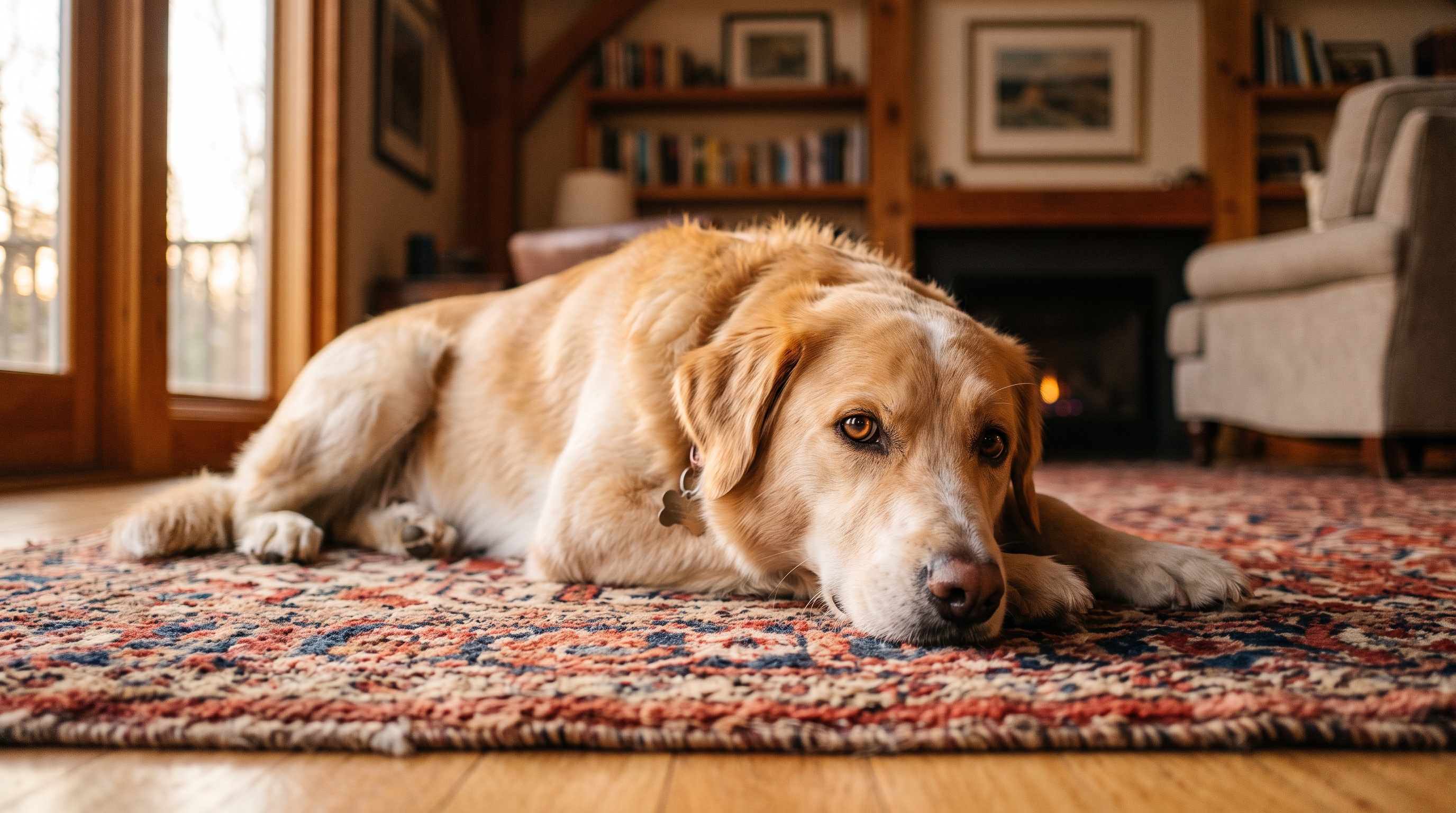
Anxiety looks different in different dogs. Some shake, pant heavily, or hide when they are scared. Others bark a lot, pace, or become clingy. Some have accidents indoors, refuse food, or stare at nothing. Some freeze or go unusually quiet.
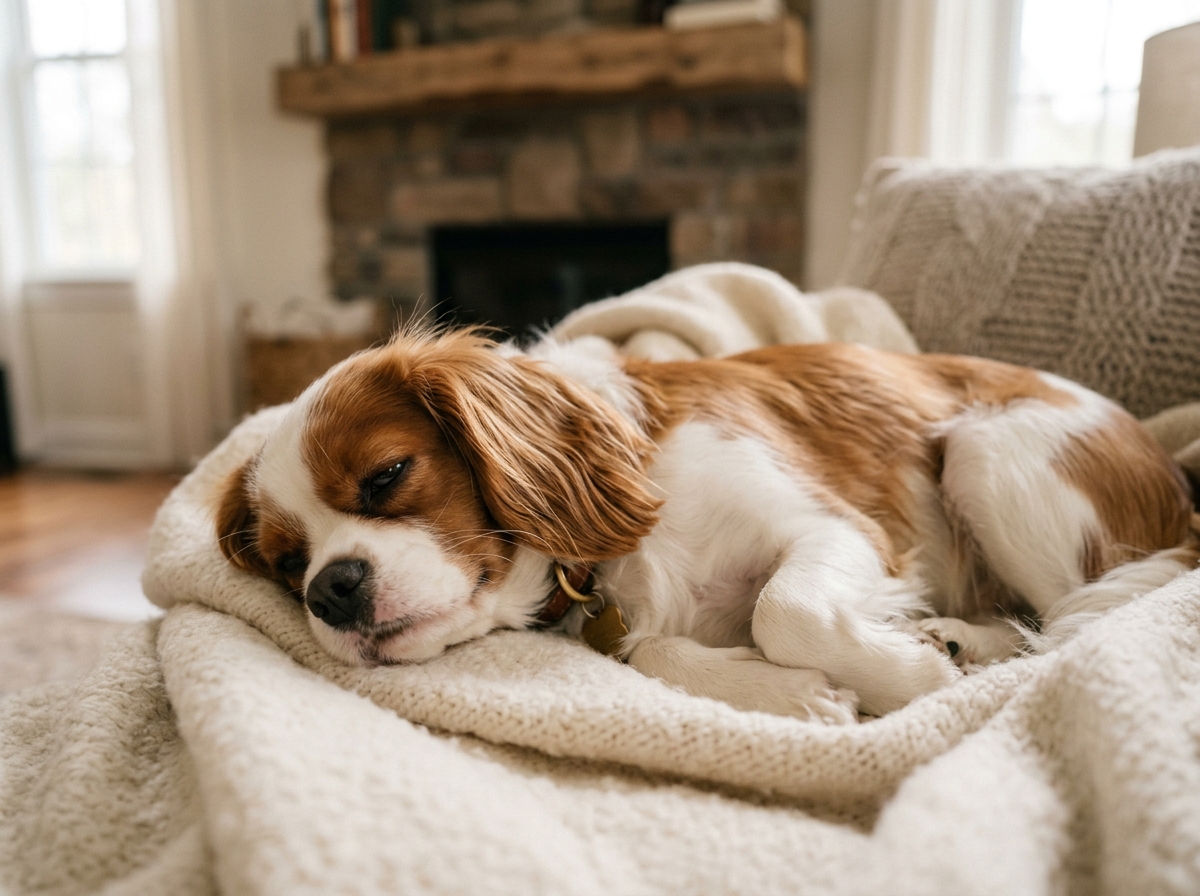
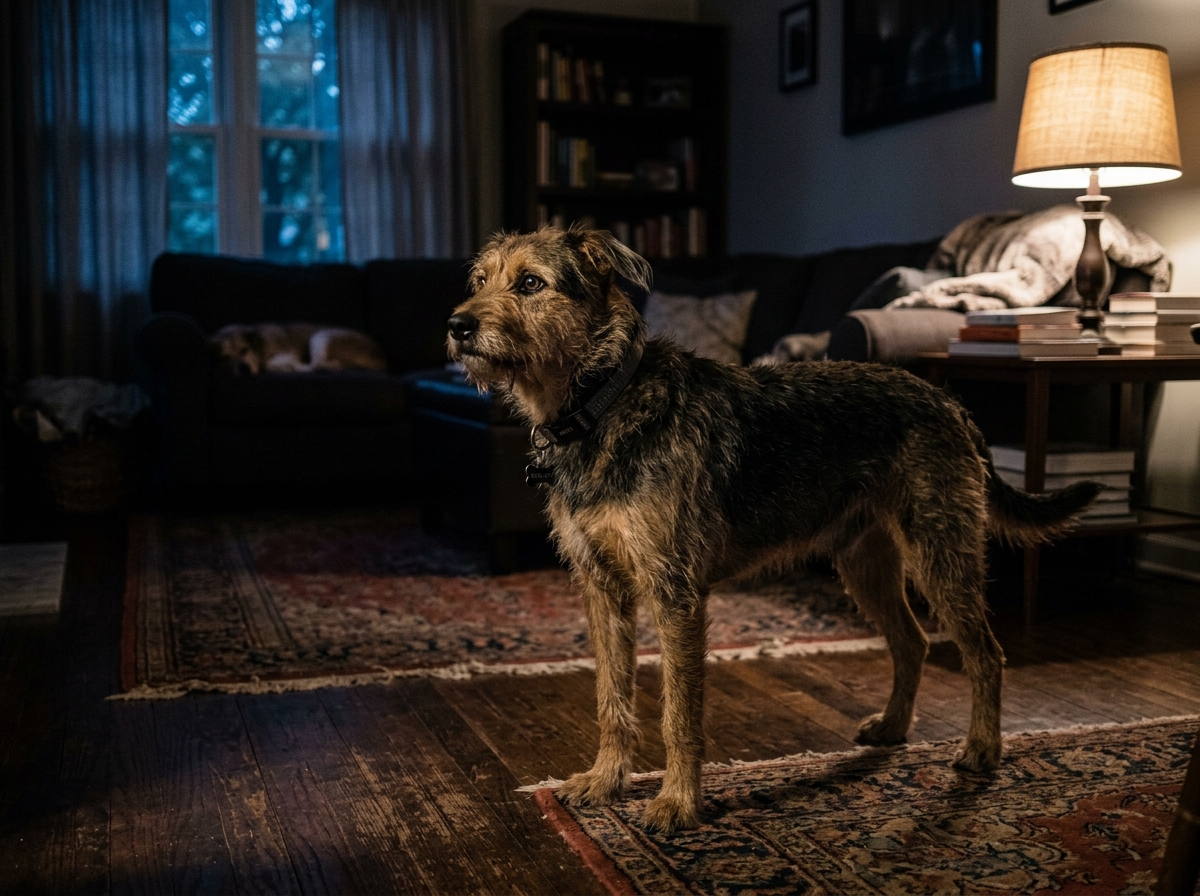
Watch the body language. An anxious dog often has a tucked tail, pinned-back ears, and a tight face. Breathing may be shallow and fast, and they may lick their lips or drool more than usual. The key is noticing what is different for your dog. If they suddenly seem more worried or more reactive, that is worth attention. Anxiety also disrupts rest, so sleep quality is a window into your dog's wellbeing.
Creating a Calm Environment
You cannot remove every trigger, but you can build a space where your dog feels safer. A quiet, dimly lit room with comfortable bedding gives your dog a retreat, and some dogs settle with soft music or white noise that masks startling sounds.
Consistency helps. Keep feeding, walks, and play predictable, since routine makes the world feel less random and frightening. Gentle exercise burns anxious energy without overstimulating, and a short calm walk often beats an intense play session when anxiety is high. Your own calm matters too. When your dog is anxious, your stress adds to theirs, so speak in a low, steady voice and stay relaxed. Your dog reads you like a mirror.
When to See Your Veterinarian
New or worsening anxiety always deserves a vet visit. Anxiety that appears suddenly can signal pain, illness, or cognitive change. Your vet can rule out medical causes, check for pain, and talk through whether training, supplements, or medication might help.
Your vet may suggest blood work to check for thyroid issues, urinary infections, or other conditions that shift behavior. Some dogs benefit from calming support we cover in our reviews, though these work best alongside other strategies, not instead of them.
Supporting Long-Term Emotional Health
Helping an anxious dog is a process, not a quick fix, and patience and consistency make the difference. Some dogs improve with environmental changes alone. Others need more, which might include training, medication, or work with a certified behavior professional.
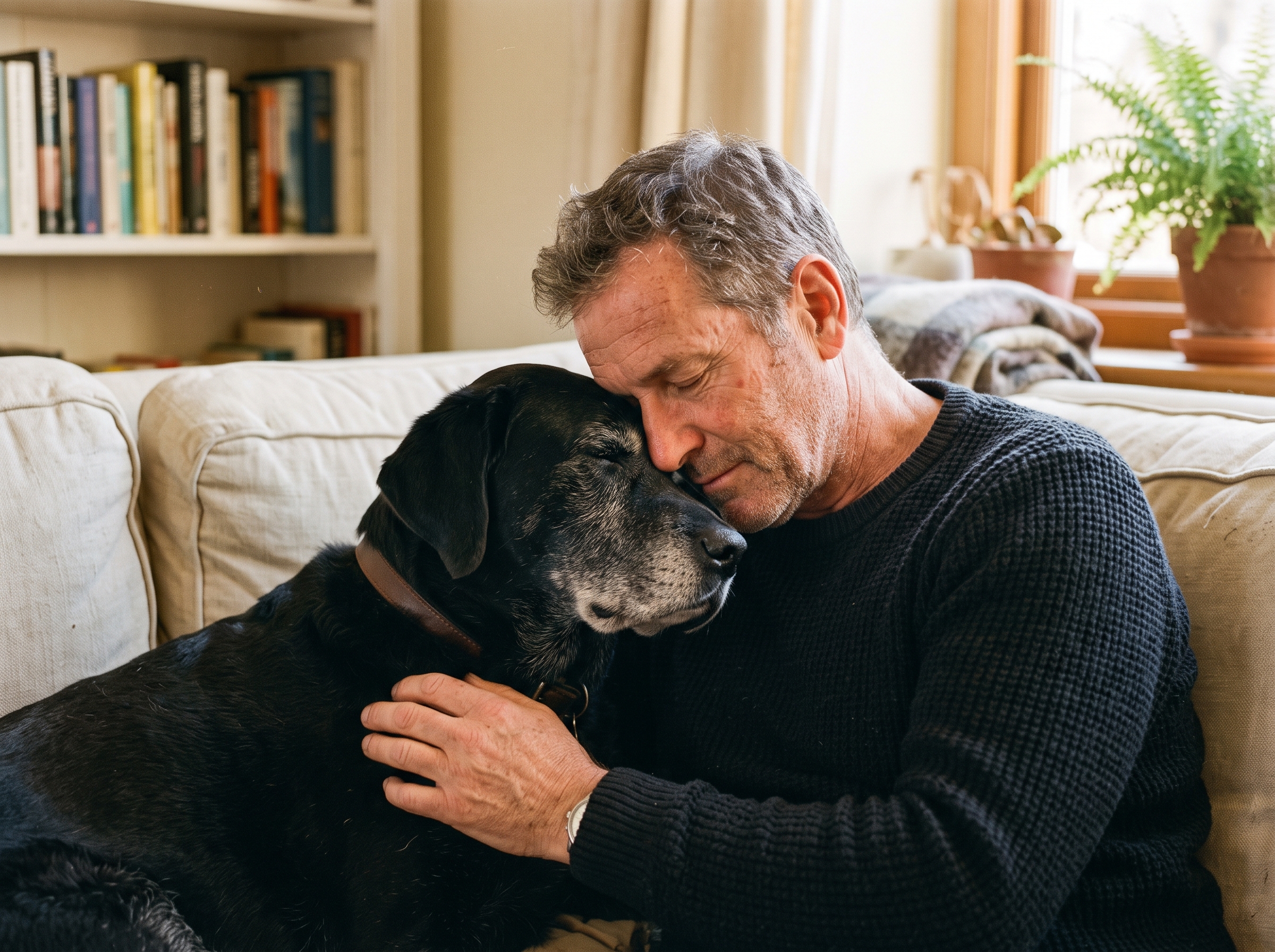
Do not feel guilty about your dog's anxiety. It is not a reflection of your care. Plenty of dogs struggle with worry, just as plenty of people do. What matters is that you notice it and take steps to help. Over time, with the right support, many anxious dogs grow more confident and relaxed.